

Enlightenment After Dark
The Shadow Side of Modern Spirituality

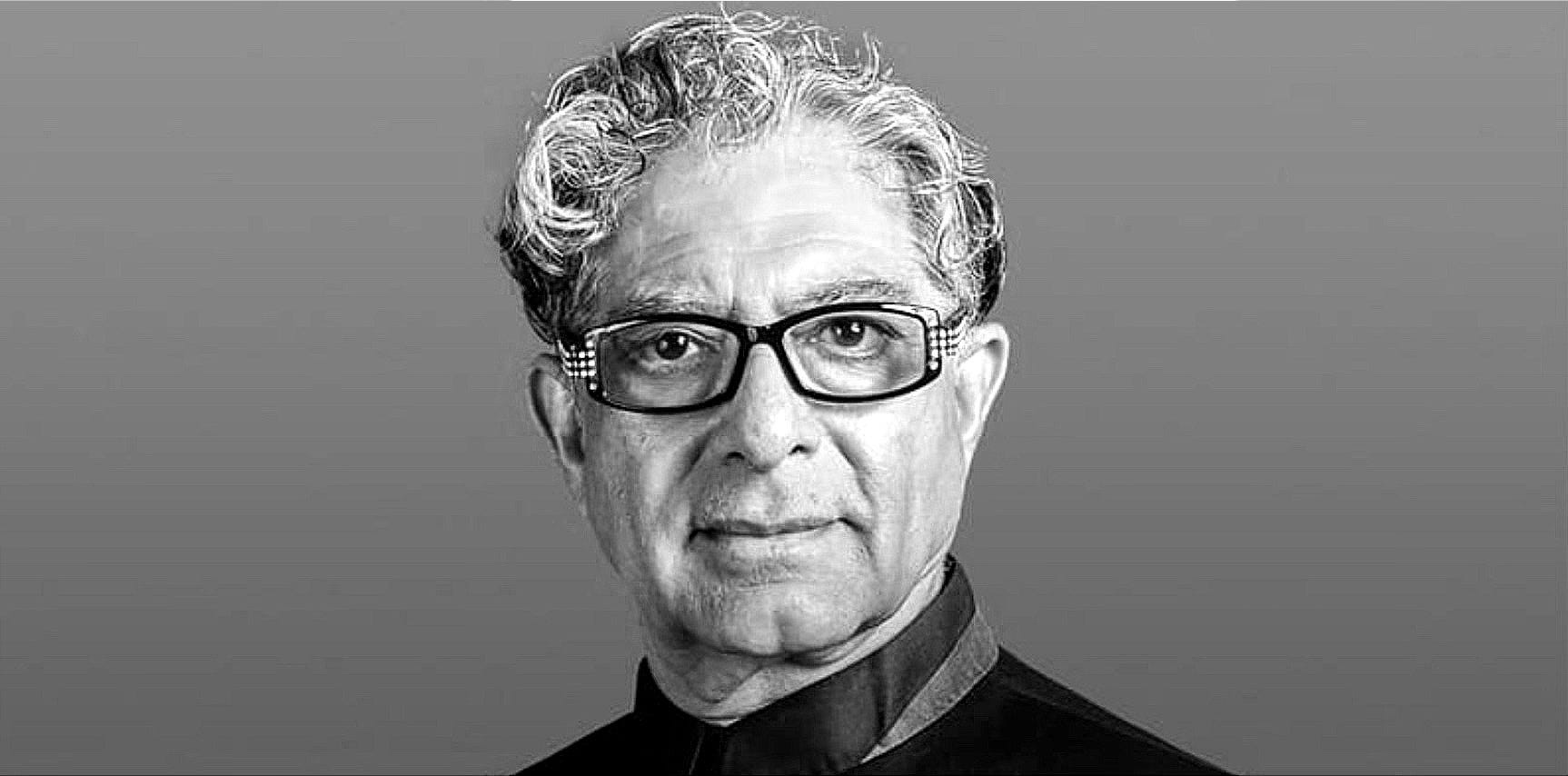
Confession time - I’ve been working all week on a piece for Black History Month on Black Jesus, James Cone and Liberation - stay tuned for this one- then the next headline broke….Deepak is in the files! I tried to put it aside and let others speak to it. But when I saw the video of him being confronted in the airport - I had to pivot and address it. So, let’s get right to it.
The Great Dissolution
We are living through a kind of spiritual reckoning that history only recognizes in retrospect. In real time it feels like chaos, exposure, unraveling. But beneath the noise, something more revealing is underway.
Every era that undergoes genuine awakening must also undergo revelation. Not the soft revelation of insight alone, but the harder revelation of truth; truth about power, about harm, and about the stories we told ourselves to feel stable. Awakening is not just illumination; it is excavation.
And excavation is messy.
It turns over stones we would rather leave undisturbed. It brings into daylight what was normalized, ignored, or quietly managed behind closed doors. It reveals how often charisma was mistaken for character, how often influence was mistaken for integrity, how often spiritual language was used to float above moral responsibility.
In that sense, what we call “scandal” is not an interruption of awakening; it is one of its instruments.
When exposure is happening across sectors—politics, religion, business, media, and yes, spirituality—it is worth asking whether this is merely cultural volatility, or whether it is a collective demand for congruence. A demand that what is professed in the light can withstand scrutiny in the dark.
A true awakening leaves no stone unturned because consciousness itself is pressing toward coherence. Toward alignment. Toward a world where our private ethics and public influence can no longer live separate lives.
And so it should not surprise us that no sector is exempt—not even those that speak the language of enlightenment.
The Guru in The Room
Like so many others I was saddened and surprised to hear of Deepak Chopra’s name in the Epstein files. Like so many of my friends and colleagues, I’ve taught from his many books, studied them in my own journey and have shared the platform with him as both host and fellow speaker. His work, The Seven Spiritual Laws of Success, was one of the first I taught from and has remained a favorite over the years.
If you don’t know him - here’s his bio line from substack:
Deepak Chopra, MD, FACP, FRCP, is a pioneer in integrative medicine, AI well-being innovation, and personal transformation. Author of 95+ books, he serves as professor at UC San Diego and was named one of TIME’s 100 most influential people.
I hesitated to write a post about his exposed comments in the files, partly because I don’t like chasing headlines here, and because I don’t like duplicating good work - immediately there were several good articles already circulating, such as my friend Rev. Dr. Robert Brzezinski’s and Rev. Evelyn Bourne (Ambilike) post here:


I was also very curious to see how this played out beyond his initial statement about “tone” (insert eye-roll here). To be clear, I believe the emails from Deepak in the files are damning beyond any reasonable explanation. His initial statement was complete bypass and gaslighting to the millions of people that have entrusted even a moment of their spiritual journey in his care or wisdom.
I also believe that sexual exploitation, trafficking, coercion, and abuse are moral wrongs, and while Mr. Chopra has not been accused of any such behavior - his association and engagement with Jeffery Epstein who has, in my personal opinion, goes far beyond “poor judgment” and raises questions that deserve transparency and accountability. That much is clear right now. Full stop.
Chopra carries tremendous power and influence through his massive spiritual network. That power comes with responsibility, so lets be clear: Power used to manipulate vulnerability is a moral wrong. Wealth and influence used to evade accountability is a moral wrong. I feel deeply for the many students who are moving through emotions of disappointment and betrayal.
As such I was deeply curious to see how Chopra would respond in public as this unfolded. We did not have to wait long. Justin Deschamps - who posts videos of public figures he comes across in public spaces gave us this yesterday:
“You Decide”
- that was his answer when questioned about his relationship, he passed it off onto not only the one filming, but each of us. It was typical spiritual bypass and too often typical of a movement that teaches a personal authority that is beyond collective accountability. The conclusion on his behavior is “your personal choice” - what does that say to anyone who is on the receiving side of manipulation and abuse?1
Our moral responsibility to one another, to ethics and behavior that protect the vulnerable and uphold integrity is vital to our personal and collective well being. Yet it is often over-looked in hyper individualistic spirituality.
But the truth is no metaphysics, no non-duality teaching, no “higher consciousness” dissolves those truths.
One of the great shadows in modern spirituality is the tendency to relativize harm in the name of transcendence. To pass it off as “perspective” or low vibration thinking. This kind of warped justification has produced a lot of harm in spiritual circles. Sexual abuse, coercion and emotional manipulation has left a trail of victims in spiritual communities from yoga to personal coaches to church community leaders. Calls for justice are often dismissed in favor of the enlightened gains of personal lessons and the conscious “evolution” of abuser and victim alike.
Here’s the thing: justice is not the opposite of spirituality - it is one of its tests. A spirituality that cannot name harm is not evolved; it is anesthetized.
When spirituality prioritizes personal enlightenment over collective responsibility - that’s not spirituality at all. It’s privatized transcendence.
Deepak, for all the wisdom that can be extracted from his books, became a master, not so much in wisdom teachings (after all, his work is based on ancient universal principles and teachings that he did not originate) but rather in privatized transcendence. He amassed wealth and popularity not as demonstration of spiritual principles, but as a result of leveraged spiritual capitalism. He mastered the tools and enjoyed all the privilege and access it afforded him.
The higher the pedestal, the longer the shadow it cast.
We Created This
Part of what is being revealed in this season has to do with the spiritual culture many of us helped create, participate in, or inherit—the world often called Spiritual But Not Religious. My friend Liz Bucar writes about it here:

SBNR and the larger spiritual space it plays a part in emerged, in many ways, as a necessary protest. A protest against rigid dogma, institutional hypocrisy, exclusionary theology, and moral frameworks that harmed as much as they healed. SBNR opened doors. It gave language to interiority, affirmed personal experience, and made room for seekers who could no longer breathe inside inherited structures.
There is real grace in that history.
But every corrective carries its own shadow if it matures no further.
In freeing the individual from oppressive religious authority, SBNR often enthroned the individual as the final authority. Discernment became privatized. Accountability became optional. Community became a loose network rather than a covenant. The question quietly shifted from What is true and just? to What resonates with me? What is “my truth?”
And resonance, while meaningful, is not the same as responsibility.
A spirituality organized primarily around personal growth can subtly drift into a spirituality organized around personal comfort. It can train us to curate inspiration while avoiding confrontation, to seek expansion while sidestepping repair, to talk about consciousness without talking about consequence.
This is not a failure of intention; it is a limitation of framework. Its why in my book, Freedom From Discord, I speak of moving from Me to We Consciousness.
Because consciousness does not stop at the edge of the individual. It organizes the world we share. And when a spiritual culture forgets that, it can unintentionally mirror the very hyper-individualism that dominates the wider society.
consciousness does not stop at the edge of the individual. It organizes the world we share.
The result is a paradox: a spirituality that speaks of oneness while practicing isolation, that celebrates awakening while neglecting accountability, that affirms love but hesitates at justice when justice feels disruptive.
And in such a culture, when moral failures surface (Deepak is hardly the first), there are few shared structures strong enough to hold leaders, or communities responsibly.
Don’t Look Away
Look, I’ve been with Deepak when the mic and camera is off and the audience has gone home. If I were asked to give that experience one word, it would be: Aloof.
Aloofness can look like wisdom.
Distance can look like transcendence.
Silence can look like neutrality.
But they are not always the same.
There is a version of spiritual detachment that is deeply mature, the kind that frees a person from reactivity, ego defense, and the need to dominate every conversation. That detachment can be compassionate and grounded.
But there is another version that is less about liberation and more about insulation and borders on disdain for the mundane.
It is the distance of those who benefit from being perceived as “above it all.” The calm of those whose lives are buffered from consequence. The neutrality of those for whom the status quo is not an immediate threat.
In this posture, engagement with harm is reframed as “low consciousness.” Calls for accountability are labeled “drama.” Moral urgency is dismissed as being “caught in duality.” (an accusation my justice work has suffered more than once.)
Yet history shows us something sobering: power rarely corrects itself without pressure. Harm rarely heals without naming. Justice rarely emerges from detachment alone.
A spirituality that trains people to hover above conflict can unintentionally train them to hover above responsibility.
And when spiritual authority is paired with social influence, that distance does not remain personal, it becomes cultural. It shapes communities. It signals what matters and what can be ignored. It teaches followers, quietly, that serenity is more important than solidarity.
But serenity and “enlightenment” that depends on looking away is not peace: it is avoidance with better branding.
“Enlightenment without accountability is just privilege with better branding.”
If awakening is truly underway in our time, then even our spiritual icons and institutions must face the same invitation as everyone else: to close the gap between insight and integrity, between inner realization and outer responsibility.
Because the measure of consciousness is not how far it rises above the world, but how deeply it shows up within it.
And the true measure of our personal work is the expansion of our circle of concern - not our distance from responsibility.
From Me to We
The ultimate aim of the quest must be neither release nor ecstasy for oneself, but the wisdom and the power to serve others. - Joseph Campbell
If this moment is exposing the limits of hyper-individualized spirituality, it is also inviting the birth of a more mature and engaged form of spiritual life.
A spirituality capable of meeting this hour must be measured not only by how it soothes the soul, but by how it shapes our participation in the world. It must be spacious enough for contemplation and sturdy enough for conscience. It must hold inner transformation and outer responsibility as partners, not competitors.
Mature spirituality is not less mystical; it is more integrated.
It does not abandon transcendence; it anchors it in relationship.
Such a spirituality understands that awakening is not an escape from the world’s pain but a deeper initiation into our responsibility within it. It recognizes that consciousness is creative—not only in manifesting personal outcomes, but in shaping social realities, cultural norms, and collective futures.
In this way, liberation is not a private attainment; It is a shared horizon.
A mature spirituality asks different questions than the SBNR culture often trained us to ask.
Not merely: Am I at peace?
But also: Am I in right relationship?
Not merely: Is this expanding my awareness?
But also: Is this expanding justice, dignity, and belonging?
Coherence then becomes the spiritual discipline of alignment. The alignment between what we affirm and what we allow, between what we preach and what we practice, between our metaphysics and our ethics.
Not the coherence of image management or reputation, but the coherence of a life where our inner claims and outer choices increasingly agree with one another. Where what we say about oneness is visible in how we treat the vulnerable. Where what we say about love is reflected in what we refuse to excuse.
This is where spirituality grows up.
It moves from self-actualization to mutual accountability. From personal healing to collective repair. From private enlightenment to public integrity.
A spirituality worthy of the name liberation must be able to stand in the tension between grace and truth, between mercy and justice, between inner awakening and outer transformation.
Not perfectly.
But sincerely.
And together.
Perhaps what we are witnessing in this era is not the collapse of spirituality, but its adolescence giving way to adulthood.
Adulthood is less enchanted with image. Less satisfied with charisma. Less tolerant of dissonance between message and method.
It is more concerned with integrity. With repair. With the slow, courageous work of building a world that reflects the consciousness we claim to embody.
If awakening is real—and I believe it is—then it will not only expand our awareness; It will refine our character.
It will mature our communities, it will press us toward coherence. And coherence, in the end, is another word for lived truth.
The world does not suffer from a lack of spiritual language. It suffers from a shortage of spiritual courage.
And courage, in the spiritual sense, is not loudness or self-righteousness. It is the willingness to remain awake when sleep would be easier. To remain honest when denial would be more comfortable. To remain engaged when detachment would protect our image.
The moral awakening that nearly every sector of life is moving through right now is not a mass shaming. It is a mass remembering. A remembering that our lives touch other lives.
That our choices shape shared realities. That consciousness is not a private possession but a collective force.
If we are serious about liberation, personal or collective, then our spirituality must become large enough to hold accountability, repair, and justice as sacred work. Not as distractions from awakening, but as expressions of it.
The question before us is no longer merely How aware can I become?
But also: How trustworthy can my awareness be in the world we share?
That is the work of a mature spirituality.
That is the path toward liberation that lasts.
A Spiritual Practice for Moral Coherence
A Daily Alignment Practice (10–15 minutes)
1) Stillness
Sit in silence and gently notice your breath. Let the nervous system settle.
Affirm inwardly:
“I am willing to see clearly.”
2) Self-Inquiry
Ask yourself three questions, without self-condemnation:
Where am I living in alignment with my values?
Where am I tempted to look away?
Where is life inviting me into greater integrity?
Let answers arise honestly.
3) Commitment
Choose one small act of coherence for the day:
A truthful conversation
A repair where harm was done
A boundary that protects dignity
A courageous word in defense of others
Small coherences build trustworthy souls.
Prayer for Moral Awakening
Let this be read slowly, or aloud in community:
There is One Life, One Intelligence, One Love expressing through all.
A Love that is not sentimental, but sustaining.
A Truth that is not harsh, but clarifying.
A Presence that does not look away.
I affirm that this Presence awakens within us now—
Not only as peace, but as conscience.
Not only as light, but as courage.
Not only as comfort, but as clarity.
May we be willing to see what we have avoided,
To name what we have softened,
To repair what we have harmed,
And to align what we believe with how we live.
Where we have chosen image over integrity, awaken us.
Where we have chosen silence over solidarity, strengthen us.
Where we have chosen comfort over justice, mature us.
Let our spirituality be large enough
To tell the truth,
To protect the vulnerable,
To challenge misuse of power,
And to grow beyond our own self-interest.
I trust that moral awakening is not punishment, but liberation.
Not condemnation, but course correction.
Not the end of faith, but its fulfillment.
And so I affirm:
A braver love is rising.
A clearer consciousness is emerging.
A deeper integrity is possible.
We are willing participants in that awakening.
We are not above it.
We are within it.
And for this remembering, I give thanks.
I release this word into the Law of Love and Growth.
And so it is.
Rev. Dr. David Alexander D.D., is a public theologian and spiritual writer exploring the intersection of spirituality, justice, and moral imagination in public life. Bringing 20 plus years of pulpit ministry with Centers for Spiritual Living, into everyday life and the call for a better world. He is the author of Freedom from Discord: The Promise of New Thought Liberation Theology and the visionary behind Recovery from the Lie of Whiteness. David also writes the monthly column Philosophy in Action for Science of Mind magazine.
This is my full time work and primary source of income. Thank you for sharing your good with me. Together, we can demonstrate that abundance is the nature of reality.
RESOURCES:

ASSOCATION FOR SPIRITUAL INTEGRITY
https://www.spiritual-integrity.org
This is not an inditement, nor accusation of any wrongdoing of Deepak Chopra.
Very very well said and written. Thank you for your voice. I have a lot of thoughts on this… 🙏
I appreciate your piece. That being said, it’s so sad to me that it took a scandal this terrible touching the SBNR community to get ministers and leaders in New Thought to begin to acknowledge that all that “don’t give attention to negativity” was psychologically abusive and out of integrity, which ironically is a phrase often lobbed at people who point out issues - usually about someone in a leadership role.
After years, and tears, and a significant amount of money, I walked away from New Thought and became a sort of pariah as well as beacon of light. Pariah to anyone who didn’t want to face the truth; beacon for those also disenfranchised.
I cautiously embrace NT’s new found moral compass, but am not sure that the same issues that led Deepak astray won’t
continue to be problematic within the organizations that want to “be” NT: power, greed, and stardom/fame.
Here’s hoping the better angels finally get their opening.
Rebecca